Low-Maintenance Lakefront Rock Garden Design
Tired of messy lakefront rock beds and cottonwood fluff? Learn how to simplify your rock gardens and design low-maintenance shoreline landscaping.
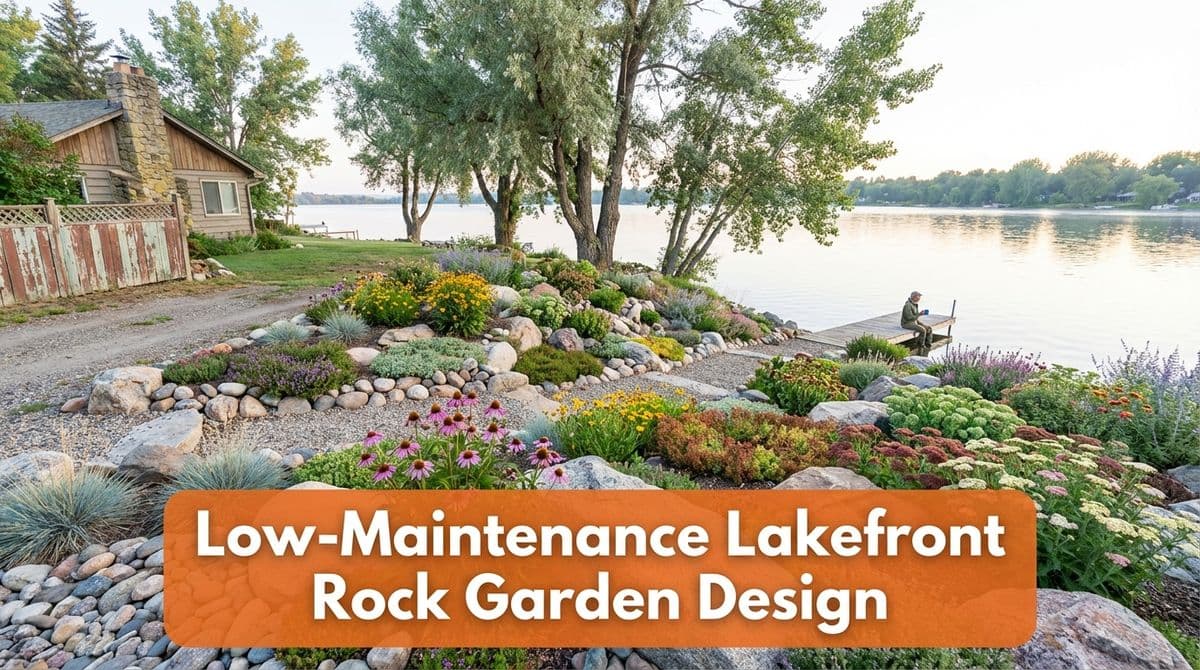
Designing Low-Maintenance Lakefront Landscaping
We recently got a call from a customer — let’s call her Lisa — who has a place on a small lake and was feeling overwhelmed every time the snow melted. On the lakeside of her home, the previous owners had installed large rock garden areas. At first it looked nice, but after almost five years, she realized it was more than she could keep up with, especially since they’re not at the cabin all the time.
On top of that, Lisa’s yard is surrounded by cottonwood trees. When they start dropping cotton, it “snows” on the property — and all that fluffy white stuff collects in the rock beds and makes everything look messy and junky. She wasn’t sure if she should keep rock, switch to mulch, or just rip the whole thing out and start over.
We set up a time to meet her at the lake and walk through some options. The questions she had are ones we hear often from lakefront homeowners, so I thought it would be helpful to share the advice we gave her.
Rock vs. Mulch Under Cottonwood Trees
Lisa’s biggest question was whether she should stick with rock or switch to mulch in her lakeside beds. With all that cotton floating around, it felt like nothing would ever look clean for long.
Here’s what I explained to her: cottonwood fluff tends to snag on anything rigid. Mulch, especially shredded or chunk bark mulch, is full of edges and surfaces that catch and hold onto the cotton. Rock, by comparison, has smoother surfaces and doesn’t “grab” the cotton as much. It will still land there, but it tends to blow through or be easier to clean off.
For heavy cottonwood areas, rock is usually the better low-maintenance choice. If you go with mulch, you’ll likely spend more time raking, picking, and blowing cotton out of the beds — and it never looks totally clean during peak cotton season.
How to Make Rock Beds Easier to Clean
We walked through a few practical tweaks that make rock beds under cottonwoods more manageable:
- Use medium-sized rock (not pea gravel). Pieces in the 1½–2 inch range don’t move as easily under a blower and don’t trap debris as tightly.
- Avoid overly jagged decorative rock. Smoother stone surfaces let cotton and leaves blow off more easily.
- Install a good edging (steel, concrete, or high-quality composite) so you can run a blower right along the edge without blasting rock into the lawn.
- Keep the bed depth consistent so there aren’t low spots where debris collects and compacts.
Simplifying Oversized Rock Gardens at the Lake
Another issue Lisa had: the lakeside beds were just too big. Large planting areas might look impressive when they’re brand new, but if you’re not living at the cabin full-time, they quickly become a burden.
Our approach for low-maintenance lakefront properties is to shrink and simplify:
- Reduce the total bed area to key focal points (near the deck, along the entry, or framing a nice lake view).
- Convert some former bed areas back to lawn or groundcover that can be mowed or left more natural.
- Group plants in simple clusters rather than dozens of different varieties scattered everywhere.
For Lisa, we talked about trimming the lakeside beds down to a narrower strip along the shoreline side of the house and one or two accent areas, instead of one huge, continuous rock garden that needed constant weeding and cleaning.
Shoreline-Friendly Plant Choices That Stay Tidy
On lakeshore properties, we also need to think about erosion, runoff, and water quality. Even when a homeowner wants low maintenance, we can still choose plants that help protect the shoreline and don’t create extra mess.
We walked Lisa through some options that work well in our area and play nicely with rock:
- Clump-forming ornamental grasses (like feather reed or little bluestem) that stay in neat tufts instead of sending runners everywhere.
- Compact shrubs (like dwarf spirea or potentilla) that don’t need constant pruning and hold soil in place.
- Low-growing perennials (like sedum and daylilies) that can poke through rock, provide color, and limit weed space.
- Native shoreline plants in any naturalized buffer area, which help filter runoff and stabilize the bank.
The key is choosing plants that don’t drop tons of messy leaves, seed pods, or fruit right into the rock. We try to avoid anything with aggressive spreading roots or self-seeding habits in these simplified beds.
Drainage and Erosion Control on Lakefront Slopes
Many lakefront homes, including Lisa’s, have at least a gentle slope down toward the water. When you’re reworking rock gardens in these areas, you don’t want to accidentally create runoff problems, washouts, or channels that carry soil into the lake.
Here are a few design details we consider on every lake project:
- Direct roof water properly with downspout extensions or rock swales so runoff doesn’t cut straight through beds and down the hill.
- Use larger rock or boulders in steeper areas to help break the flow of water and lock smaller rock in place.
- Keep a vegetated strip or native buffer near the waterline, where allowed, to absorb and filter runoff before it hits the lake.
- Install fabric correctly (if used) so water can pass through but soil isn’t washed out from underneath the rock.
Handled properly, a simplified rock layout can actually improve erosion control and make your shoreline look cleaner and more intentional.
A Simple Maintenance Routine for Lakefront Rock Beds
Lisa wanted to know how much time she’d actually spend maintaining things once we simplified the design. While every property is different, we usually suggest a basic seasonal checklist for low-maintenance lakefront rock beds:
- Early spring: Lightly blow or rake leaves and branches off the rock; pull or spot-spray any early weeds.
- Late spring/early summer: During peak cottonwood season, use a leaf blower once a week to move cotton off the beds before it mats down.
- Mid-summer: Quick weed check every few weeks; trim any plants that are flopping into pathways.
- Fall: Final cleanup of leaves and debris; top off any thin rock spots if needed.
By reducing the size and complexity of the rock gardens, this routine usually takes well under an hour per visit for most lake properties. That’s the goal: spend more time enjoying the lake and less time fighting weeds and cotton.
Planning Your Own Low-Maintenance Lakefront Design
If you’re looking at your lakeside beds right now and feeling the same frustration Lisa did — big rock gardens, messy cottonwood fluff, and more upkeep than you signed up for — you’re not alone.
When we come out to a lake property, we usually:
- Walk the shoreline and identify where we can shrink and simplify planting areas.
- Talk through rock vs. mulch based on your trees, wind exposure, and how often you’re at the property.
- Recommend shoreline-friendly plants that fit a low-maintenance lifestyle.
- Look closely at drainage and erosion so the new layout protects both your yard and the lake.
With a thoughtful design, even properties surrounded by messy cottonwoods can have clean, attractive, and easy-care lakeside landscaping. If you’re ready to simplify your own rock gardens and make the most of your lakefront, we’d be happy to take a look and help you put together a plan.